Top
 

Fabric Welding

Advanced Fabric Welding Solutions: RF Welding, Ultrasonic Welding, and More

We specialize in fabric welding, delivering high-quality solutions for industries that demand precision, durability, and safety. Our fabric welding expertise ensures leak-proof seams, secure containment, and reliable product performance.

What is Fabric Welding? 

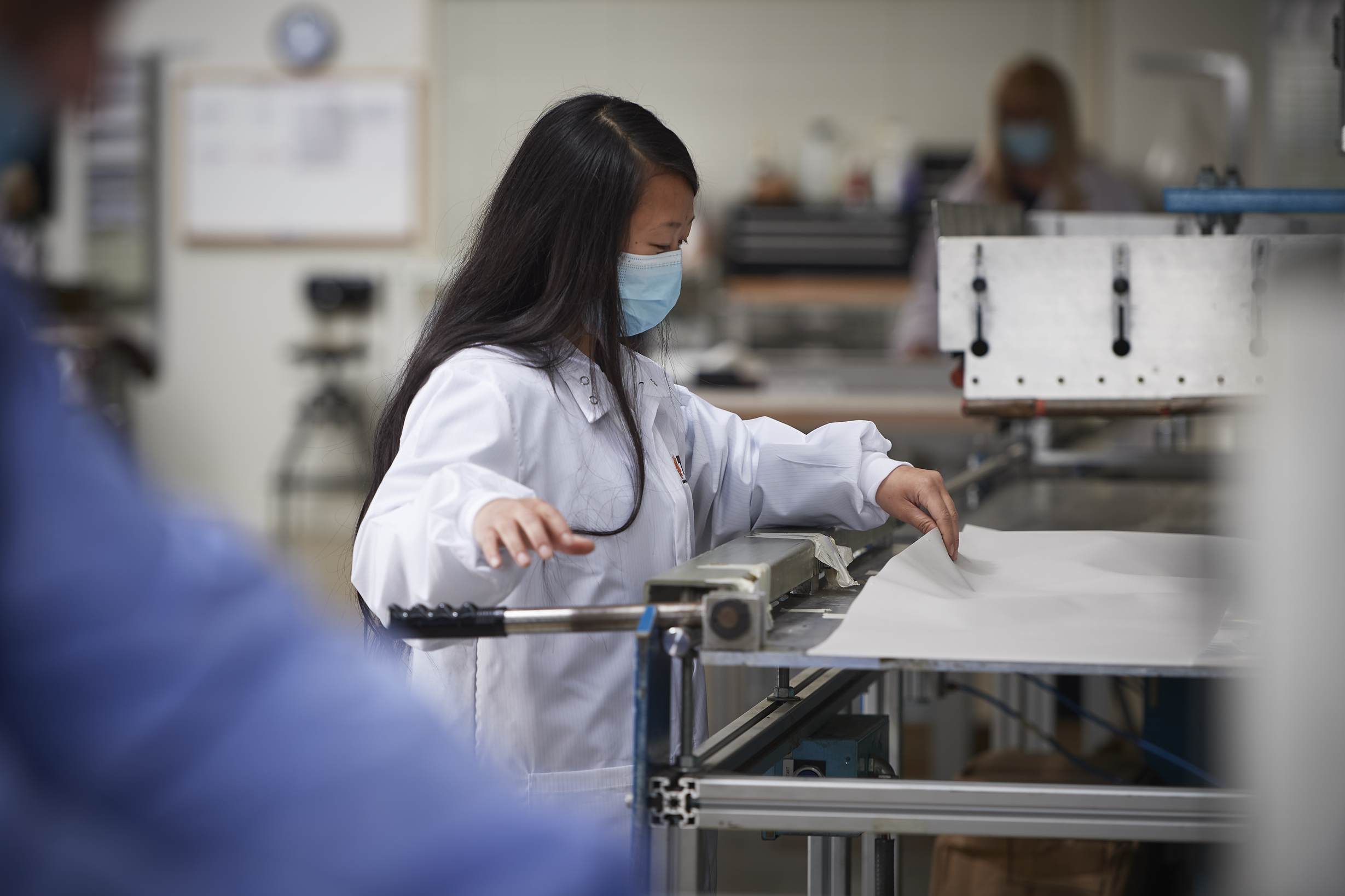
Fabric welding is the process of bonding industrial fabrics through various heat-sealing techniques to create strong, airtight, and waterproof seams. This technology is essential in medical, military, and other applications, where air and liquid containment are crucial. 

Fabric Welding Techniques

TPI offers a range of fabric welding techniques to meet the unique specifications of each project, including: 

  • RF Welding (Radio Frequency Welding): Ideal for airtight and watertight seams, RF welding applies high-frequency electromagnetic energy to bond coated fabrics, ensuring durability and a smooth finish.
  • Ultrasonic Welding: Uses high-frequency sound waves to create strong, precise seams without the need for adhesives or stitching.
  • Free Hand Welding: A versatile method used for complex and custom applications requiring detailed craftsmanship.
  • Custom Seam Welding: Engineered to meet specific industry requirements for durability and performance.
  • Impulse Welding & Hot Platen: Provides additional sealing strength for specialized applications.

Fabric Welding Applications

TPI’s fabric welding services cater to a wide range of industries, ensuring product reliability and safety. Our expertise includes: 

Medical Device Fabric Welding 

  • MRI Therapy Device Covers, Pad Covers, and Gurney Covers – Ensures hygiene and protection.
  • Respiratory Therapy Bladders – Provides airtight and durable containment.
  • Hospital Bed Covers (Including Sewn Options) – Leak-proof and easy to sanitize.
  • Patient Transfer Boards – Durable, seamless construction for smooth patient movement.
  • Chemo Caps & Sleep Apnea Gear – Comfort and durability in medical environments.
  • DVT Cuffs & Air Compression Leg Wraps – Essential for post-surgical care.

Industrial & Robotic Applications

  • Robotic IPX Sleeves – Shields robots from splashes and contamination.
  • Negative Pressure Isolation Tents – Essential for infectious disease management.
  • Medical Instrument Covers & Welded Bladders – Ensures sterile and leak-proof protection.
  • Orthopedic Neuropathy Welding – Provides seamless, comfortable support.
  • Fuel Liners for Gas Tanks – Leak-resistant solutions for fuel storage.

Why Choose TPI for Fabric Welding? 

TPI is an ISO-certified manufacturing company committed to quality and innovation. Our fabric welding process ensures compliance with industry standards, including tensile and burst strength requirements. We work closely with our clients to determine the optimal materials, seam design, and bonding method for their specific applications. 

Partner with TPI for Your Fabric Welding Needs 

TPI’s fabric welding expertise ensures strong, secure, and reliable solutions. Contact us today to discuss your fabric welding requirements, including RF welding, ultrasonic welding, and other advanced techniques. 

FAQ's For Fabric Welding

      1. On average, how long does it take to complete a fabric welding project?  

                This can vary depending on the size and scope of the project.  It also depends on the amount of time the customer will need to test the product.  We see development projects (on the simple side) taking 2 weeks to produce product for FAI’s, while the more complicated products could range from 60-90 days. 

      2. How are TPI’s fabric welding services unique? 

                When possible we use a fast-prototyping tool initially to dial in the fit and function before we move on to more elaborate production friendly tooling.  This allows us to be flexible and nimble while providing samples to our customers in a relatively short amount of time and at a fraction of the cost of more elaborate tools. 


      3. How do I know that TPI’s fabric welding services are high quality? 

                We work with our customers to identify their specification needs, testing criteria so we provide product that is durable and meets the requirements. This can include specifying materials to meet compliance and testing criteria. 


      4. What is the average lifetime of a product created by TPI? 

                Since every customer product is unique, it could range from a single patient use to reusable based on the application. 


      5. Are there any recommendations from TPI that pertain to fabric welding projects? 

                For each application and market, it would be important to understand the compliance requirements prior to starting a project so that the correct materials can be specified saving time and expense. 

                TPI’s quality and sourcing staff can assist customers during the early stages of development if there is uncertainty. 


      6. What fabrics can be welded? 

                Those fabrics that have been coated or are plastic based materials such as Thermoplastic Polyurethane or Polyvinyl chloride 


      7. What’s the benefit of fabric welding? 

                This provides a sealed seam that can encapsulate materials within or can prevent materials from penetrating.